When you’re missing a tooth, the decision between a bridge or implant can feel overwhelming. At Kincaid Family Dental in Broken Arrow, we understand that this choice affects more than just your appearance—it impacts how you eat, speak, and feel confident in daily interactions. Dr. Matt Kincaid and our experienced team help patients navigate these important decisions with personalized care and honest guidance, ensuring you choose the solution that best fits your unique needs and lifestyle.
Understanding Your Options: Bridge vs. Implant Fundamentals
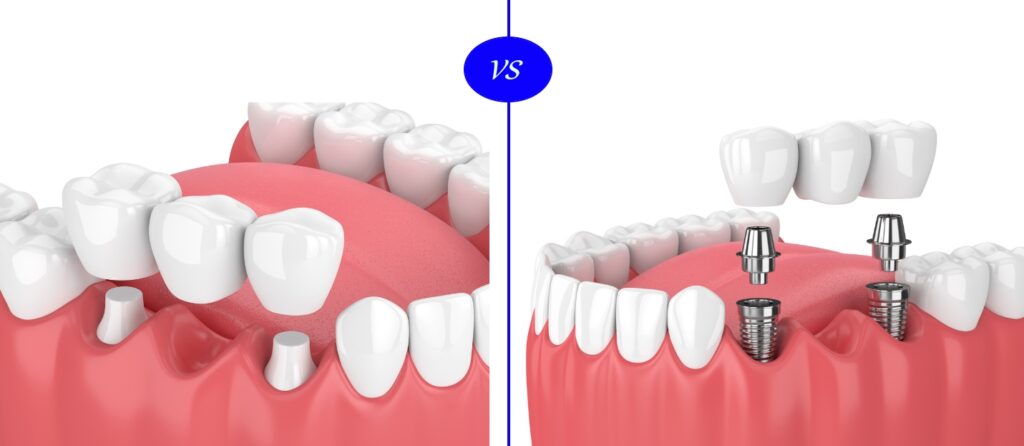
Both dental bridges and implants serve the same primary purpose: replacing missing teeth and restoring full function to your mouth. However, their approaches differ significantly. A dental bridge uses your existing adjacent teeth as support structures, essentially creating a “bridge” across the gap with a custom-made artificial tooth. The surrounding teeth are prepared with crowns to anchor the bridge securely in place.
Dental implants take a completely different approach. Rather than relying on neighboring teeth, an implant consists of a titanium post surgically placed into your jawbone, which then supports a custom crown. This mimics the natural structure of a tooth, from root to crown, creating a standalone replacement that doesn’t affect your other teeth.
When a Dental Bridge Makes Sense
Certain situations make bridges particularly attractive for tooth replacement:
- Faster treatment timeline: Bridges can typically be completed in just a few weeks
- Less invasive procedure: No surgical implant placement required
- Adjacent teeth need work: If neighboring teeth already require crowns or have large fillings, a bridge addresses multiple issues simultaneously
- Budget considerations: Lower upfront costs compared to implants
- Jawbone limitations: When insufficient bone density makes implant placement challenging
Our restorative dentistry approach ensures we thoroughly evaluate whether a bridge aligns with your oral health goals and circumstances.
The Appeal of Dental Implants
Many patients gravitate toward implants for compelling reasons. Unlike bridges, implants don’t require altering healthy adjacent teeth, preserving your natural tooth structure. The titanium post integrates with your jawbone through a process called osseointegration, creating a stable foundation that helps maintain bone density and facial structure.
Implants offer remarkable durability and functionality. You can eat your favorite foods without restriction, speak clearly, and maintain oral hygiene just like with natural teeth. The aesthetic results are exceptional—implants look and feel remarkably similar to your original teeth. For many patients seeking a long-term solution, implants represent the gold standard in tooth replacement.
What to Expect During Treatment
Your journey begins with a comprehensive evaluation where Dr. Matt Kincaid examines your oral health, discusses your lifestyle preferences, and explains how each option fits your specific situation. We review your medical history, take detailed imaging, and create a treatment plan tailored specifically for you.
Bridge treatment typically involves:
- Initial consultation and treatment planning
- Preparation of adjacent teeth
- Temporary bridge placement
- Final bridge fitting and adjustment
Implant treatment follows a different timeline:
- Comprehensive planning and bone assessment
- Surgical implant placement
- Healing period (3-6 months)
- Crown placement and final adjustments
Our dental services encompass both options, ensuring you receive expert care regardless of your choice.
Comparing Long-Term Investment and Maintenance
Understanding the financial and maintenance aspects helps inform your decision between a bridge or implant. Bridges generally require lower initial investment but may need replacement every 10-15 years. Daily care involves regular brushing and flossing, though special floss threaders help clean under the bridge. Preventative dentistry plays a crucial role in extending bridge longevity.
Implants typically involve higher upfront costs but can last decades with proper care—sometimes a lifetime. Maintenance mirrors caring for natural teeth: regular brushing, flossing, and professional cleanings. Since implants don’t affect adjacent teeth, they often represent better long-term value despite initial expense differences.
Emergency Considerations and Ongoing Care
Both bridges and implants can occasionally require attention. If you experience issues like loosened bridges or implant complications, our emergency dentistry services provide prompt, professional care to address urgent concerns.
Regular checkups remain essential regardless of your choice. Our team monitors your restoration’s condition, surrounding tissues, and overall oral health to catch potential issues early. This proactive approach helps maximize your investment and ensures optimal long-term results.
Making Your Decision at Kincaid Family Dental
Choosing between a bridge or implant shouldn’t feel rushed or pressured. Our team takes time to answer questions, address concerns, and help you feel confident about your decision. We provide detailed cost breakdowns and work with your insurance to maximize benefits.
Located conveniently in Broken Arrow, we serve families throughout the area with personalized care that prioritizes your comfort and satisfaction. Our in-house savings plan helps make quality dental care more accessible for patients without traditional insurance.
Take the Next Step Toward Your Best Smile
Don’t let uncertainty keep you from addressing your missing tooth. Schedule a consultation with Dr. Matt Kincaid to explore whether a bridge or implant best serves your needs. We’ll provide honest recommendations, clear explanations, and support throughout your treatment journey. Contact our office today or visit us at our convenient Broken Arrow location to begin restoring your smile with confidence and care that puts your needs first.